Kelsi was 23 when doctors diagnosed her with adult idiopathic scoliosis and told her she’d eventually lose the ability to walk. Surgery was her only chance to live a normal life and a tissue donor was her best chance at a successful surgery.
Her pain was already debilitating, but with a curve that was increasing a degree each year, Kelsi was expected to have severe breathing problems by age 30. When she went in for surgery in November of 2011, her back was at a 45 degree curve in both the thoracic and lumbar vertebrae.
Although the surgery came with no guarantees, Kelsi knew she had a good shot at an effective procedure and speedy recovery because of the gift she would receive from a donor, a gift from someone she would never meet. The surgery changed everything. Today, Kelsi is a mom to 2 kids, she was able to carry and chase them through their toddler years, and she now lives the kind of life she once worried might not be possible. That experience never left her. It shaped the way she sees the world and the way she gives back. Through her work with In Memoriam, a funeral home in Broomfield, Kelsi now helps families honor the lives of the people they love, telling stories that preserve memories and celebrate legacies. Saying yes to donation reaches further than we can see. Sometimes it helps someone stand taller. Sometimes it helps them build a life
“Going through with the surgery was the best thing I could have ever done,” she shared. “I think it’s safe to say that if I didn’t receive donor bone, I would be living a completely different life.”
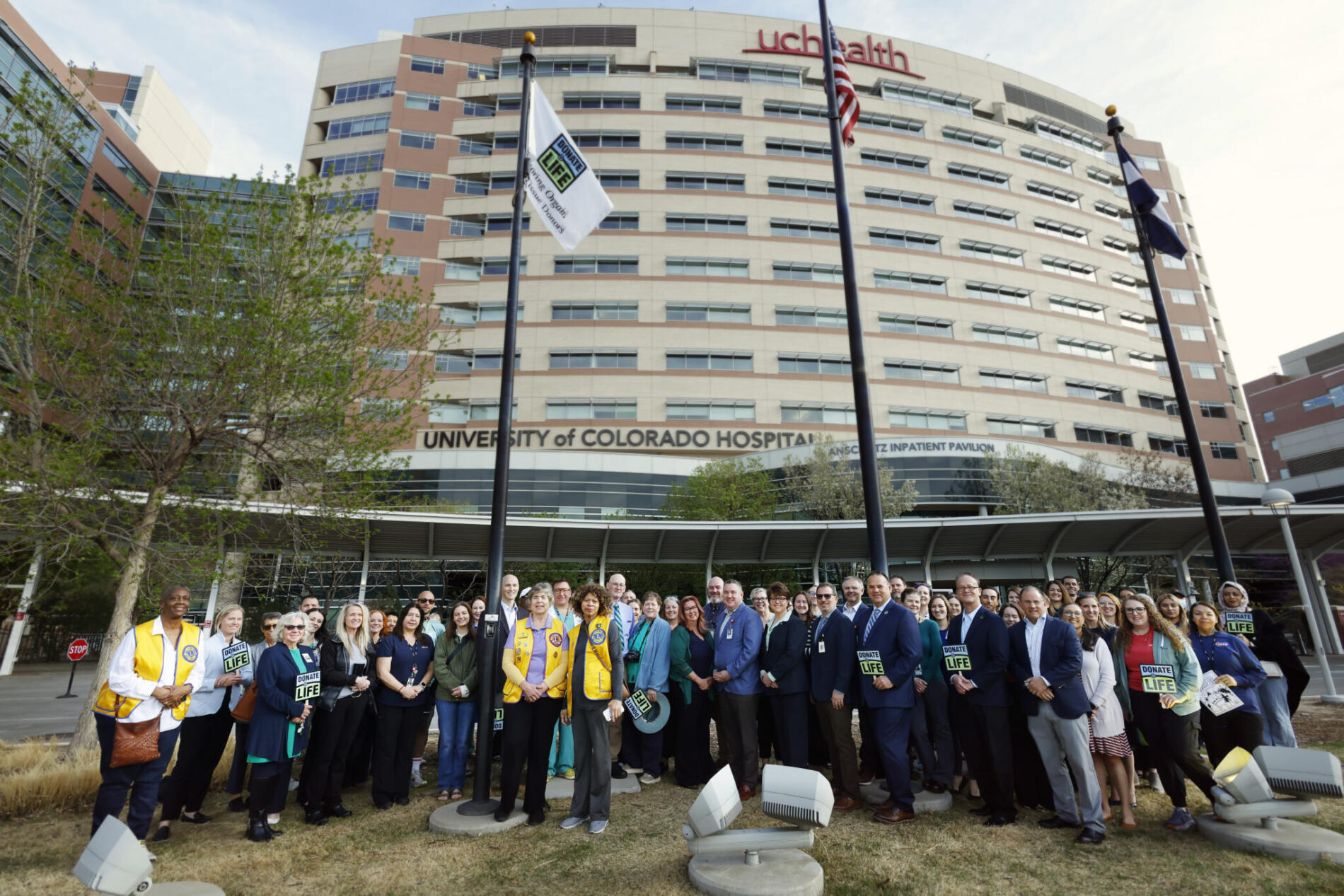
April is National Donate Life Month, a national observance highlighting the importance of organ, eye and tissue donation. Flag-raising ceremonies bring awareness of what it means to be an organ donor and highlights the partnership between Donor Alliance and the Wings Over the Rockies Air & Space Museum.
Donation Essentials Blog
It’s the start of National Donate Life Month, which means across Colorado and Wyoming, a blue and green flag rises above hospitals, schools, city halls and community spaces.
Flag raisings mark the start of a month dedicated to honoring donors, celebrating transplant recipients and recognizing those who continue to wait for a lifesaving transplant. They’re moments to take a pause from our lives and reflect on the impact of organ, eye and tissue donation.
We’ll take a closer look at what a Donate Life flag represents, why these ceremonies are held, and how you can keep that spirit of generosity going long after the flag is raised.
What is a Donate Life flag raising ceremony and what does it mean?
If you’ve never attended a Donate Life flag raising, or if you’ve driven by a local hospital in April and noticed a blue and green flag flying, you might have wondered what it represents.
Every year, hospitals across the country raise Donate Life flags as part of National Donate Life Month, a month dedicated to raising awareness about organ, eye, and tissue donation and honoring those who have given the gift of life. Since 2006, these flags have become a powerful symbol of unity, hope, and remembrance for everyone touched by donation and transplantation.
Flag raisings are different everywhere you go; some are small and intimate, while others fill a courtyard with speeches and crowds. But the meaning never changes. The ceremony honors donors, celebrates recipients, and reminds all of us that life is fragile and precious.
Hospitals, schools, and community spaces in our region have already started hosting flag raising ceremonies. To find an event near you, check out our event calendar. No matter the location or the crowd, every flag raising ceremony is a time to honor generosity and remember the difference one person can make. As we move on to the second week of National Donate Life month, even more hospitals, schools, and city halls across our region will participate in a flag raising ceremony. Find one near you on our event calendar, watch the flag rise, and remember why it matters.
What Does the Donate Life Flag Represent?
Since 2006, Donate Life flags have served as a nationwide display of unity, remembrance and hope. They are a symbol to honor heroic organ, eye, and tissue donors.
While Donate Life flag raising ceremonies are often held in April for National Donate Life Month, the Donate Life flag can actually fly all year long.
In Colorado, many hospitals fly the flag every time someone has given the gift of life through organ, eye and tissue donation. Flying that flag is a small yet powerful way to honor selfless donors and their families.
What Can You Do to Show Your Support?
Now that you know what the Donate Life flag represents and why flag raising ceremonies take place in Colorado and Wyoming, we encourage you to keep an eye out for the Donate Life flag when you drive by a local hospital. Some even hold a small moment of silent reverence for donors and their families whenever they see the Donate Life flag flying high.
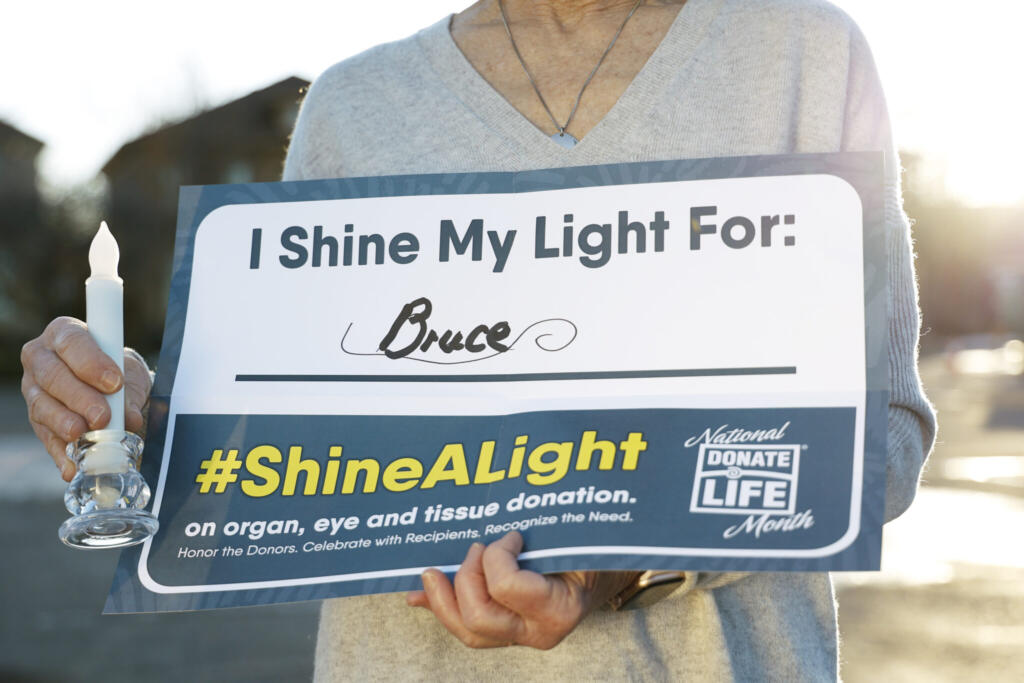
This April, be sure to #ShineALight in honor of National Donate Life month. Getting involved is easy! We invite you to request a free #ShineALight kit. The kit includes a battery-operated candle and a “I Shine A Light For…” sign. Use a bold marker to write the name of the person you are honoring this April. Then, place the battery-operated candle and sign in your window or on your desk throughout the month to show your support.
There are several events taking place this month to participate in, including the Annual Blue & Green Lighting Ceremony at Sculpture Park on April 9th. Beyond that event, there are dozens of flag raisings, proclamations, and other community observances taking place.
Join the celebration this year by signing up to be an organ, eye and tissue donor at Donate Life Colorado or Donate Life Wyoming. Then checkout all the other ways you can celebrate National Donate Life Month with us.